The Pandemic of the Unprivileged
Introduction
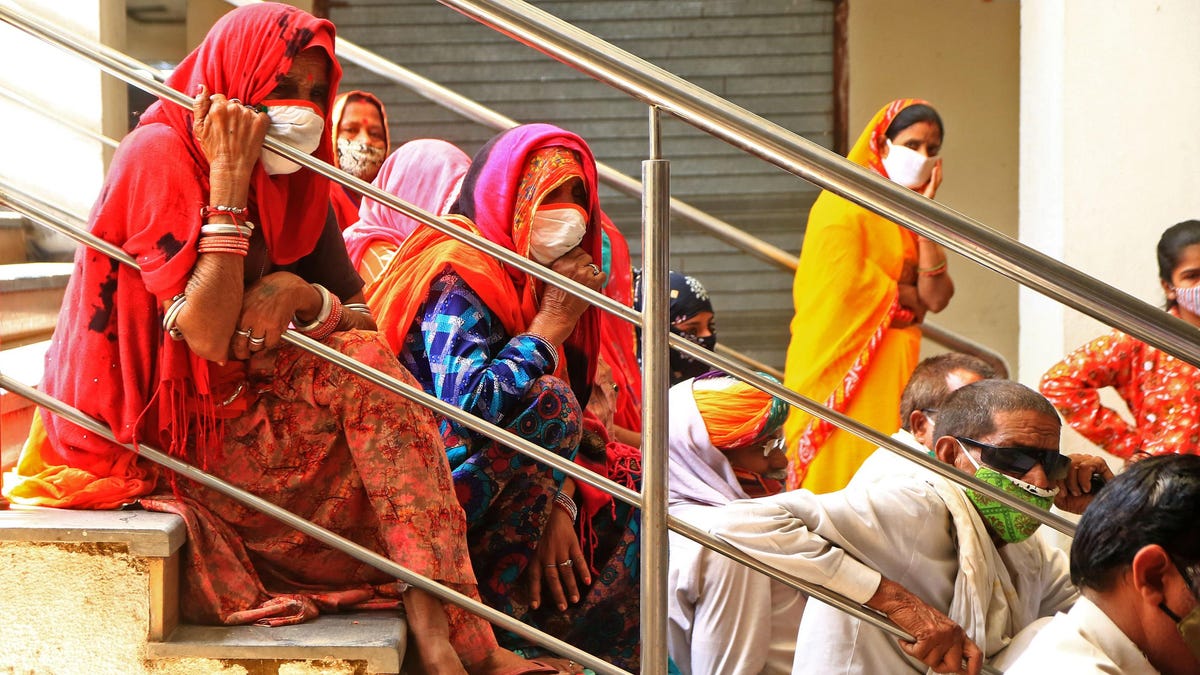
Cataclysmic disasters are not always global in the true sense of the term. Our familiarity with natural calamities mostly involves a period of intense loss and disruption to normal life within one geographic region. It is after a very long time that the civilized and globalized world has come to face a challenge where no geographical boundaries could be drawn, and the direct duration was so prolonged that a new and permanent normal is now being spoken of. However, in labeling the COVID pandemic as a global phenomenon which uniformly spares no one, there is the chance of missing the devil which lies in the details. It merits some emphasis to understand the dynamics of the pandemic’s impact with some granularity, and if it truly has been equal to all.
The Deep Divide of Inequality - Women in Natural Disasters
Nothing sets the tone for discussing the impact of sociocultural inequities on the COVID pandemic better than a brief account of how women in general fare in natural disasters. The statistics are startling. In the 2004 Indian Ocean tsunamis, for every 3 men who lost their lives, 7 women lost theirs. In case of Cyclone Gorky in Bangladesh in 1991, the number rises to a shocking 1:14. The Nepal earthquakes in 2015 disproportionately impacted the livelihoods of single women in the country. In March 2021, the World Bank published a report rather brusquely titled “Gender Dynamics of Disaster Risk and Resilience” covering this matter. Socioeconomic inequalities are essentially man-made constructs, and so natural calamities should be immune to any such bias. But as the report points out, among two structurally different people-groups, the one which for centuries has been weakened through sustained and directed repression will feel the impact of a calamity the strongest. “Natural hazards are gender-neutral - but their impact is not”.
While it is not statistically sound to ascribe the entire skewedness to inequality of opportunity; the evidence supports the fact that in a lot of south Asian communities, it is a lot more difficult for a woman to go through the motions of daily life, wherever she may lie on the social and economic spectra, in comparison to a similarly placed man. In the aftermath of a natural calamity, the heightened challenge to live became insurmountable.
Opportunity Gaps and COVID-19
Now we move beyond the confines of gender dynamics. As the researchers at World Bank were putting finishing touches to their article, the world was actually creeping towards an unplanned, uncontrollable, live experiment which would take their argument and prove its validity. The premise stands true not just within the ambit of gender-centric inequity; every social, political, economic, cultural lack of privilege scales up tremendously when presented in unnatural circumstances. The gaps in opportunity which existed have over the past two years become a chasm.
An Economy of the 1%
Concrete statistical evidence corroborates this conjecture, as does theoretical analysis. While economic metrics are definitely not a complete representation of all forms of social inequity, they do a fair job as an indicative proxy. As modern capitalism continues to push civilization towards “An Economy for the 1%”, COVID has exacerbated the rate of rising economic gap. In the first year of the pandemic when formal and informal unemployment both took a massive hit, India’s billionaires increased their combined wealth by 35%. It does raise the question whether this increase came at some cost to the 90 million informal jobs surrendered, how it was impacted by inequality of opportunities, and what role the state played.
But the focus needs to broaden from just looking at financial conditions of individuals and households, and include facets which are not measurable by income alone. Instead of looking at disadvantaged people-groups in isolation, it helps to perform this analysis by focusing on a particular human concern, and then comparing the pandemic’s impact across different homogeneous clusters. Here, I look at three crucial concerns: opportunity of education, outlook towards public sanitation & hygiene, and domestic abuse.
Education and Youth
With a severely malfunctioning public school education system, first-generation Indian learners with negligible social capital were to begin with going through incorrigibly poor quality of learning. The COVID pandemic practically put a complete end to that as well. A comparison between two households with different availability of resources and varying importance given to education suffices to illustrate this example. Where private education is unthinkable (and unattainable), internet enabled devices and connectivity is out of reach, and no help is there to be received at home, certain groups of school-going children simply got kicked right out of the orbit of education. When education was such an uphill task to begin with, a long disconnect also kills any chance of getting back into the system. A child with greater privilege and access is also going through their own set of pandemic-induced problems, which are not to be over-sighted - but the comparison pales.
Social Prejudices in Hygiene and Sanitation
In spite of government initiatives spread over multiple regimes, sanitation and hygiene remain unpenetrated in parts of the country - but even where it is, aspersions regarding lack of hygiene are not necessarily perpetrated on the basis of cleanliness alone. Personal cleanliness in India and attitudes regarding the same is deeply entrenched in social perceptions steeped in concepts of caste and class. Aspersions and allegations regarding cleanliness and habits of “lower castes” have forced many urban daily-wage earners into unemployment in the peak of the pandemic, because “dirty people spread the virus”. Much of the migrant movement crisis in May 2021 (particularly from western India) can be attributed to public opinion regarding lower castes, where they were forced to leave or vacate their place of work and residence, mostly without justification, because of unsubstantiated and biased perceptions regarding their hygiene. This does not address or solve the problem of sanitation and hygiene, but exacerbates it into a bigger social issue.
The Other Sex
Throw in a catastrophe into routine life, and the “other” sex will fare worse than the male counterparts. Mental health has been affected across the entire population since the pandemic began, due to unemployment, cash crunch, health concerns, lack of privacy, and a general sense of suffocation arising out of the lockdowns. Negative human emotions are a natural consequence of such uncertainty, which then finds a terrible release in the form of domestic violence. Domestic abuse is undiscriminating; it is immune to boundaries of class, caste, and education. A recent nationwide study by The Print is titled as follows: “52% Indian women think it’s okay for their husbands to beat them. Only 42% men agree”. The silent yet monstrous satire and sarcasm makes it apparent which people-group faced the brunt of lockdown-induced stress.
Conclusion
In conclusion, there is no valid disagreement on the point that the pandemic in its devastation has not in fact been equal to all, and therefore correcting the damage needs to account for the divergences. We have all suffered, in our different ways, in coming to terms with this once-in-a-century event, and we all continue to cope with it. But when rectification and countering the digression caused by the pandemic is the purpose, it is important to remember that by far the greatest imperative right now is to address the issue of the pandemic of the unprivileged.
Photo Credits: Forbes
Bibliography
- Nepal quake impact on single women underlines need for equal land rights (Reuters)
- Gender Dynamics of Disaster Risk and Resilience (World Bank)
- More Women Die in Natural Disasters—Why? And What Can Be Done? (Brink News)
- Covid deepened inequalities: wealth, education, gender (The Indian Express)
- Analysis: The Social Inequities That COVID-19 Pandemic Exacerbated (Feminism in India)
- 52% Indian women think it’s okay for their husbands to beat them. Only 42% men agree (The Print)